Recommended Blog Posts
- Global Talent Stream to CEC: How Canadian Work Experience Can Support PR
- Biometrics for Canada PR vs. Temporary Visas: Why Your Old Data May Not Be Enough
- 20 Things to Do After Landing in Canada as a PR (2026 Checklist)
- Canada PR for Construction Managers With a Low CRS Score: Best Pathways in 2026
- Why PCC (Police Clearance Certificate) Is Essential for Canada Immigration in 2026? Facts!
English vs French for Canada PR: Which Language Strategy Works Better in 2026?
Publish On: May 08, 2026
Canada accepts both English and French language scores for immigration. For Express Entry candidates, language ability can strongly affect the CRS score, eligibility for category-based draws, and overall chances of receiving an Invitation to Apply.
In 2026, French has become more than a second-language advantage. It is now a serious Canada PR strategy for many international students, PGWP holders, temporary workers, and skilled professionals who are struggling with high CRS cut-offs in regular Express Entry rounds.
Why Language Strategy Matters For Canada PR
Language scores are one of the most important factors in Canada’s Express Entry system. A strong language result can improve your CRS score, support work integration, and increase your chances of being selected in a targeted immigration draw.
English is still the most common language used by applicants because it supports study, work, and settlement across most Canadian provinces. However, French is becoming more valuable because IRCC continues to prioritize Francophone immigration outside Quebec.
| Factor | English | French |
|---|---|---|
| Accepted Tests | IELTS, CELPIP, PTE Core | TEF Canada, TCF Canada |
| Use In Canada | Widely used across most provinces | Important for Francophone communities and bilingual roles |
| CRS Benefit | Core language points | Core points plus possible bonus points |
| Dedicated Express Entry Draws | No English-only category draw | Yes, French-language proficiency category |
| Best For | General settlement and employment | CRS improvement and targeted PR strategy |
Effect Of CLB Score On CRS
French is gaining importance because Canada wants to increase Francophone immigration outside Quebec. This means French-speaking candidates may receive targeted invitations even when general CRS cut-offs remain high.
| CLB Level | IELTS Equivalent | CRS Impact |
|---|---|---|
| CLB 5–6 | Listening: 5.0–5.5 Reading: 4.0–5.0 Writing: 5.0–5.5 Speaking: 5.0–5.5 |
Low CRS gain |
| CLB 7 | 6.0 in all abilities | Moderate CRS boost |
| CLB 8 | Listening: 7.5 Reading: 6.5 Writing: 6.5 Speaking: 6.5 |
Strong CRS increase |
| CLB 9 | Listening: 8.0 Reading: 7.0 Writing: 7.0 Speaking: 7.0 |
Major CRS jump |
| CLB 10+ | Listening: 8.5+ Reading: 8.0+ Writing: 7.5+ Speaking: 7.5+ |
Maximum language benefit |
Note: CLB 9 usually creates the biggest CRS improvement because it can increase both core language points and skill transferability points under Express Entry.
For candidates stuck between 450 and 500 CRS, French can create a practical route toward PR. It may provide additional CRS points and can also make the profile eligible for French-language category-based draws.
English Vs French Comparison For Canada PR
English is useful for everyday life, employment, and studies in Canada. French, however, can give a stronger immigration advantage when the applicant reaches the required language level.
| Applicant Situation | English Advantage | French Advantage |
|---|---|---|
| International Student | Helps with education and Canadian work experience | Can improve PR chances after graduation |
| Temporary Worker | Supports workplace communication | Can open a targeted Express Entry route |
| Low CRS Candidate | Limited improvement if English score is already high | Can add bonus CRS points |
| Bilingual Candidate | Strong base language score | Higher CRS strength and better draw flexibility |
How French Can Increase Your CRS Score : Increased RCIC Targets 2026
Canada is actively prioritizing Francophone immigration in 2026, with IRCC increasing invitations under French-language proficiency category draws to support higher Francophone immigration targets outside Quebec. Candidates who achieve strong French scores can receive additional CRS points and benefit from significantly lower CRS cut-offs compared to general Express Entry draws.
In the latest French-language proficiency draw held on April 29, 2026, IRCC issued 4,000 ITAs with a low CRS cut-off of 400, making French one of the strongest pathways for Canada PR in 2026.
French can increase your CRS score. Candidates with strong French and basic or strong English may receive additional CRS points under Express Entry.
This is why French is often seen as a CRS booster. For many applicants, it can be more useful than only repeating English tests after already reaching a high English score.
| French And English Combination | Possible Additional CRS Points |
|---|---|
| French NCLC 7 or higher with English CLB 4 or lower | Up to 25 points |
| French NCLC 7 or higher with English CLB 5 or higher | Up to 50 points |
French Category Draws And Lower CRS Scores
French-language proficiency is one of the Express Entry category-based selection areas. This gives eligible French-speaking candidates a separate opportunity to receive invitations based on language ability.
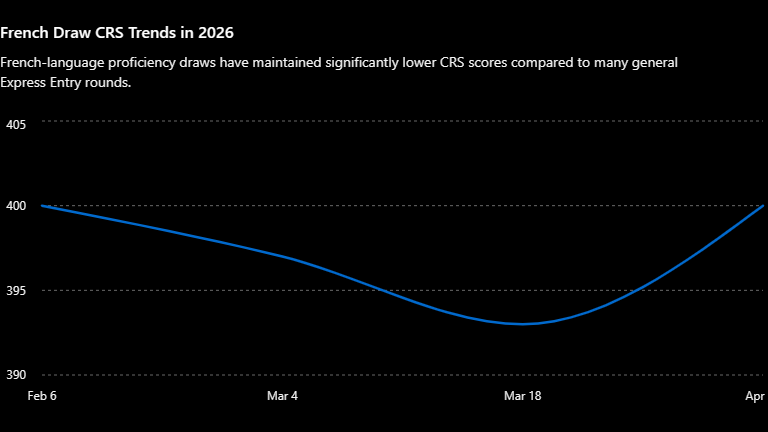
Recent French-language draws have often had lower CRS cut-offs compared with many general or CEC-focused rounds. This makes French highly valuable for candidates who are qualified but not competitive enough in high-score draws.
| Draw Type | Typical Candidate Pressure | PR Strategy Value |
|---|---|---|
| General / CEC Draws | High CRS competition | Best for candidates with very strong scores |
| Occupation-Based Draws | Limited to selected occupations | Best for healthcare, trades, education, STEM, or priority jobs |
| French-Language Draws | Based mainly on French proficiency | Best for candidates who can reach NCLC 7 or above |
TEF Canada Vs IELTS For Canada PR
IELTS, CELPIP, and PTE Core are English tests accepted for Canadian immigration. TEF Canada and TCF Canada are French tests accepted for immigration purposes.
IELTS may feel easier for many Indian and international applicants because they already use English in education or work. TEF Canada usually requires more preparation, but the immigration benefit can be much stronger for candidates who reach the required French level.
| Test | Language | Best For | Immigration Advantage |
|---|---|---|---|
| IELTS | English | Applicants comfortable with academic or general English | Core CRS language points |
| CELPIP | English | Applicants preferring a computer-based Canadian English test | Core CRS language points |
| PTE Core | English | Applicants preferring a computer-based English test | Core CRS language points |
| TEF Canada | French | Applicants targeting French CRS benefit | Bonus points plus French category eligibility |
| TCF Canada | French | Applicants targeting French CRS benefit | Bonus points plus French category eligibility |
Minimum French Score Needed For Express Entry
To benefit strongly from French in Express Entry, candidates usually aim for NCLC 7 or higher in all four abilities. This includes reading, writing, listening, and speaking.
NCLC 7 is important because it can help candidates qualify for French-language category-based selection and may unlock additional CRS points when combined with English scores.
| Language Skill | Target Level |
|---|---|
| Reading | NCLC 7 or higher |
| Writing | NCLC 7 or higher |
| Listening | NCLC 7 or higher |
| Speaking | NCLC 7 or higher |
Why International Students Are Learning French
Many international students in Canada are now considering French because Canadian education alone may not guarantee PR. After graduation, students often depend on PGWP work experience, CRS score, and Express Entry draw patterns.
French can help students create a stronger profile by combining Canadian education, Canadian work experience, English ability, and French-language proficiency.
| Student Profile | How French Helps |
|---|---|
| PGWP Holder | Can improve CRS and draw eligibility |
| Graduate With Average CRS | Can reduce dependence on high general cut-offs |
| Student Outside Priority Occupations | Can use language as a separate advantage |
| Bilingual Graduate | May access better job and PR opportunities |
Who Should Learn French For Canada PR?
French is most useful for candidates who need a major CRS improvement or a stronger selection pathway. It is especially practical when the candidate has enough time to prepare before their work permit, PGWP, or Express Entry profile expires.
| Candidate Type | French Strategy Value |
|---|---|
| CRS below 500 | High |
| PGWP holder with limited time | High, if preparation starts early |
| Candidate with strong English already | Very high if French reaches NCLC 7 |
| Applicant in a non-priority occupation | High because French can create another route |
| Candidate already above recent cut-offs | Optional |
How Long Does It Take To Learn French For PR?
The time required depends on your current level, learning consistency, and test preparation quality. For many beginners, reaching NCLC 7 can take several months of serious study and regular practice.
French should be treated as a long-term immigration investment, not a shortcut. Candidates should begin early if their PR strategy depends on French-language points or category-based selection.
| Starting Level | Estimated Preparation Approach |
|---|---|
| Complete Beginner | Needs structured long-term preparation |
| Basic French Knowledge | Needs grammar, vocabulary, and test-focused practice |
| Intermediate French | Needs TEF/TCF strategy and timed practice |
| Advanced French | Needs score optimization for all four modules |
Best PR Strategy Based On Your CRS Score
Your language strategy should depend on your CRS score, work experience, education, age, and available time. French is not always the easiest route, but it can be one of the strongest options for candidates stuck below regular draw cut-offs.
| CRS Range | Suggested Language Strategy |
|---|---|
| 520+ | English may be enough if draw trends remain favourable |
| 480–519 | Improve English and consider French for stronger security |
| 450–479 | French can be a major CRS improvement strategy |
| Below 450 | French plus PNP or work-experience strategy may be needed |
English Vs French PR Advantage
The table below shows a simple comparison of how English and French can support a Canada PR profile. English remains highly useful for settlement and employment, while French can offer a stronger Express Entry advantage through bonus points and targeted draws.
| PR Factor | English Advantage Score | French Advantage Score |
|---|---|---|
| Daily Settlement | 9 | 6 |
| Job Market Access | 9 | 7 |
| CRS Bonus Potential | 6 | 9 |
| Category-Based Draw Benefit | 4 | 10 |
| Low CRS Candidate Benefit | 5 | 9 |
Conclusion: English Or French For Canada PR?
English is still essential for most people who want to study, work, and settle in Canada. It supports everyday communication, employment, education, and long-term integration.
French, however, has become one of the strongest immigration strategies for Express Entry candidates in 2026. It can provide additional CRS points, eligibility for French-language draws, and a better chance of receiving an ITA when general cut-offs are high.
For many international students and temporary workers, the strongest strategy is not English vs French. The strongest strategy is English plus French. A bilingual profile can make your Canada PR application more competitive and flexible.
Official Sources
- IRCC Express Entry
- IRCC Category-Based Selection
- Francophone Immigration Through Express Entry
- Express Entry Language Requirements