Recommended Blog Posts
- Global Talent Stream Canada: A Complete Guide for Foreign Skilled Workers
- Canada PR vs Temporary Visa: 15 Powerful Benefits That Make PR the Better Choice in 2026
- Visitor Visa vs. eTA: Which One Should You Apply for to Watch Canada FIFA World Cup 2026?
- Global Skills Strategy Work Permit Guide for Workers 2026
- How Young Professionals Can Work in Canada Through IEC
Can Internationally Educated Nurses Really Build a Successful Career in Canada?
Publish On: June 29, 2026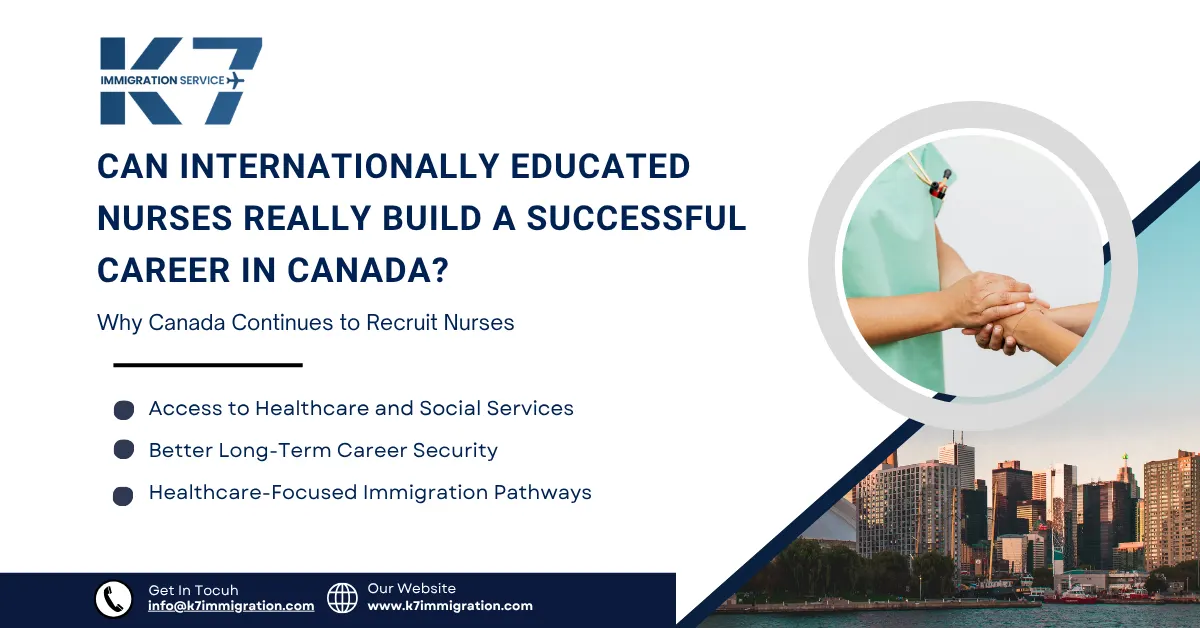
This is arguably one of the most important questions asked by nurses who are considering moving abroad.
Whether you are currently working in India, the Philippines, Nigeria, the UAE, South Africa, the United Kingdom, Australia, or another country, you have probably come across stories of nurses successfully relocating to Canada and building rewarding careers.
At the same time, you may have also heard stories about licensing challenges, credential assessments, lengthy processing times, and employment hurdles.
So what is the reality?
The good news is that internationally educated nurses (IENs) continue to play a vital role in Canada's healthcare system. In fact, many provinces are actively recruiting nurses from overseas because healthcare workforce shortages have reached critical levels in several regions.
The Canadian healthcare system depends heavily on skilled international healthcare professionals to meet growing patient demands. Hospitals, long-term care facilities, rehabilitation centers, community healthcare organizations, and rural healthcare providers are all looking for qualified nursing professionals.
This demand is not expected to disappear anytime soon.
Canada's aging population, increasing healthcare investments, and retirement of experienced nurses are creating thousands of opportunities for qualified healthcare workers. As a result, nursing remains one of the strongest professions for both employment and immigration in Canada.
However, building a successful nursing career in Canada requires more than simply obtaining permanent residency or securing a job offer. Success depends on proper planning, understanding the licensing process, meeting provincial requirements, and having realistic expectations about the transition.
The nurses who tend to succeed are those who approach the process strategically, understand the licensing requirements early, and prepare themselves for the Canadian healthcare environment before arriving.
Why Canada Continues to Welcome Internationally Educated Nurses
Canada is facing a significant healthcare workforce shortage. Healthcare facilities across the country continue to struggle with staffing gaps caused by several factors:
- Retirement of experienced nurses
- Aging Canadian population
- Increased healthcare demand
- Expansion of healthcare services
- Population growth through immigration
- Shortages in rural and remote communities
To address these challenges, healthcare employers are increasingly recruiting qualified nurses from around the world.
Countries that commonly supply nursing talent to Canada include:
- India
- Philippines
- Nigeria
- United Arab Emirates
- South Africa
- United Kingdom
- Australia
- New Zealand
Many internationally educated nurses successfully integrate into Canada's healthcare workforce each year and go on to build long-term careers, obtain permanent residency, purchase homes, and establish stable lives for their families.
For many healthcare professionals, Canada offers something that is becoming increasingly difficult to find elsewhere:
- Competitive salaries
- Job stability
- Career growth opportunities
- Family-friendly immigration pathways
- Universal healthcare benefits
- High quality of life
Understanding the Licensing Journey Before You Can Work as a Nurse in Canada
One of the biggest misconceptions among prospective immigrants is the belief that obtaining permanent residency automatically allows them to work as a nurse immediately upon arrival. Unfortunately, the process is more structured than that.
Nursing is a regulated profession in Canada. This means that before you can legally practice as a Registered Nurse (RN), Licensed Practical Nurse (LPN), or Registered Psychiatric Nurse (RPN), you must meet the requirements established by the provincial regulatory authority. The licensing process exists to ensure that all nurses practicing in Canada meet consistent standards of patient care, clinical competency, and professional ethics.
Although specific requirements vary by province, most internationally educated nurses follow a similar pathway.
Step 1: Educational Credential Assessment – Verifying Your Nursing Education
The first stage involves assessing your nursing education and professional background. Canadian regulators need to determine whether your nursing qualifications are comparable to Canadian nursing education standards.
During this stage, various documents may be reviewed, including:
- Nursing degree or diploma
- Academic transcripts
- Professional registration certificates
- Employment history
- Clinical experience records
The purpose of this assessment is not to reject international qualifications but rather to ensure that applicants possess the competencies required to provide safe patient care within Canada's healthcare system.
For many applicants, gathering and submitting documentation can be one of the most time-consuming parts of the entire process.
This is why experts often recommend beginning document collection as early as possible.
Step 2: National Nursing Assessment Service (NNAS)
The National Nursing Assessment Service (NNAS) serves as the primary gateway for many internationally educated nurses entering Canada. NNAS evaluates nursing credentials before applicants proceed to provincial licensing authorities. Think of NNAS as the organization responsible for conducting an initial review of your qualifications before your chosen province considers your application.
During the evaluation process, NNAS reviews:
Educational Background
The organization examines your nursing education, curriculum, and training history.
Professional Work Experience
Your previous clinical experience and employment history are assessed.
Registration History
Current and previous nursing licenses are reviewed.
Professional Standing
Regulators may verify that you remain in good standing with previous licensing authorities. After completing the assessment, NNAS provides an advisory report that is forwarded to the provincial nursing regulator. This report plays an important role in determining your next steps.
Step 3: Demonstrating Language Proficiency
Strong communication skills are essential in healthcare. Nurses must communicate effectively with:
- Patients
- Physicians
- Pharmacists
- Family members
- Healthcare teams
Because of this, most internationally educated nurses must demonstrate English language proficiency.
Commonly accepted examinations include:
IELTS Academic: One of the most widely recognized English proficiency tests.
CELBAN: The Canadian English Language Benchmark Assessment for Nurses specifically evaluates language skills within healthcare contexts. Language requirements vary depending on the province and nursing category. Meeting language requirements early can help avoid delays later in the licensing process.
Step 4: Applying to a Provincial Nursing Regulator
Unlike some countries that operate under a single national licensing authority, Canada regulates nursing at the provincial level. This means each province has its own nursing regulatory body responsible for evaluating applicants and issuing licenses.
Examples include:
Ontario: College of Nurses of Ontario (CNO)
British Columbia: British Columbia College of Nurses and Midwives (BCCNM)
Alberta: College of Registered Nurses of Alberta (CRNA)
Saskatchewan: College of Registered Nurses of Saskatchewan (CRNS)
These regulators review your qualifications, advisory reports, language scores, and professional background before determining whether additional requirements must be completed.
Step 5: Passing the NCLEX-RN Examination
For many internationally educated nurses, the NCLEX-RN examination represents the final major milestone before becoming licensed.
The NCLEX-RN is designed to assess whether candidates possess the clinical knowledge and critical thinking skills required to practice safely as Registered Nurses in Canada.
Unlike traditional academic examinations, the NCLEX focuses heavily on:
- Clinical judgment
- Patient safety
- Nursing interventions
- Prioritization of care
- Decision-making skills
Many internationally educated nurses spend several months preparing for the examination.
Passing the NCLEX often opens the door to significantly broader employment opportunities and higher earning potential.
How Long Does the Entire Licensing Process Usually Take?
One of the most common questions among aspiring immigrants is:
"How quickly can I start working as a nurse in Canada?"
Unfortunately, there is no universal answer. The timeline depends on several factors, including:
- Documentation readiness
- Educational background
- Regulatory requirements
- Province of application
- Language testing results
- Examination schedules
The process can vary considerably from one applicant to another.
Typical Timeline Overview
|
Stage |
Estimated Duration |
|
Credential Collection |
1–3 Months |
|
Educational Assessment |
3–6 Months |
|
NNAS Review |
4–12 Months |
|
Language Testing |
1–3 Months |
|
Provincial Registration |
2–8 Months |
|
NCLEX Preparation & Exam |
2–6 Months |
|
Job Search |
1–6 Months |
Total Estimated Timeline
For most internationally educated nurses: 12 to 24 months
Some applicants complete the process faster, while others may require additional time depending on individual circumstances.
Final Thoughts
One of the biggest advantages you can give yourself is time. Many successful immigrant nurses begin preparing their documents, language tests, credential assessments, and licensing requirements long before they submit an immigration application.
This proactive approach often helps reduce delays and creates a smoother transition once immigration approval is received. The reality is that nurses who plan ahead tend to enter the Canadian workforce faster, secure employment sooner, and adapt more effectively to the healthcare system.
While the licensing journey may seem lengthy, it is important to remember that thousands of internationally educated nurses successfully complete this process every year and go on to build rewarding careers throughout Canada. For those willing to invest the time and effort, the long-term rewards often outweigh the temporary challenges of the licensing process.