A Canada Study Visa SOP (often submitted as a Letter of Explanation / Study Plan) is the document where you explain why you want to study in Canada, why the program and institution make sense for your background, how you will pay for your studies, and why you will comply with your study permit conditions.
On the IRCC study permit document checklist, a letter of explanation is listed as “recommended,” and IRCC explicitly expects you to explain why you want to study in Canada and that you understand your responsibilities as an international student.
Why The SOP Matters In A Canada Study Permit Application
A study permit officer is deciding one big question:
Are you a genuine student with a credible, well-funded study plan who will respect temporary residence conditions?
Your SOP is where you connect all documents into one logical story:
-
Academic logic (your past studies → this program)
-
Career logic (this program → realistic outcomes)
-
Financial logic (tuition + living costs covered)
-
Compliance logic (you understand and will follow study permit conditions)
If your SOP is weak, inconsistent, or generic, it can create doubts even when your documents are correct.
Key IRCC Requirements Your SOP Must Align With
Provincial Attestation Letter (PAL/TAL) In Most Cases
Most study permit applicants must include a provincial attestation letter (PAL) or territorial attestation letter (TAL) with the study permit application, unless an exception applies. If you apply without it when required, IRCC can return the application.
Proof Of Funds Is Mandatory
IRCC requires proof of funds to show you can support yourself (and any family members).
Your SOP should reference these realities (PAL, funds, fees, responsibilities) without sounding like a copy of IRCC pages.
Recommended SOP Structure (Officer-Friendly)
| SOP Section | What The Officer Wants To See | What To Include |
|---|---|---|
| 1) Profile Snapshot | Quick context | Full name, country, education, intended program/intake |
| 2) Why This Program | Study purpose is credible | Program outcomes, skills, modules (2–4 specific examples) |
| 3) Why This Institution | Choice is informed | Why this DLI/program structure, facilities, co-op (if applicable) |
| 4) Why Canada | Country choice is logical | Education quality + industry exposure + global recognition (specific reasons) |
| 5) Academic & Career Background | You’re prepared | Relevant subjects, projects, achievements, internships/work |
| 6) Career Plan After Graduation | Clear direction | Job roles, industry demand at home, realistic salary range (avoid exaggeration) |
| 7) Financial Plan | You can afford Canada | Who pays, funds sources, tuition deposits, proof types |
| 8) Home Ties & Compliance | Temporary intent | Family/social ties, career plan at home, past travel compliance (if any) |
| 9) Study Gaps / Refusals (If Any) | Risks addressed | Honest explanation + what changed + stronger evidence now |
| 10) Closing | Clear request | Polite request for study permit, commitment to comply |
What To Write In Each SOP Part
1) Study Purpose That Makes Sense
This is the heart of your SOP.
Write:
-
Why the program is necessary for your skills/career
-
What exact competencies you will gain (mention 3–5 skills)
-
How your previous education/work connects
Example (logic, not copy-paste):
“After completing a Bachelor’s in Computer Science, I worked in QA automation. This postgraduate program in Data Analytics will formalize my statistics and data modeling skills, enabling me to move into analytics roles in my home market.”
Avoid:
-
“I chose this course because Canada is best.”
-
Random course selection unrelated to background.
2) Why This College Or University (Without Overpraising)
Do not write marketing language. Write decision language.
Include:
-
2–3 program features that match your goal (co-op, capstone, lab, accreditation, specialization)
-
Why similar programs in your home country are not equivalent for your objective (curriculum gap, lack of applied training, industry exposure)
Also ensure your documentation matches: your letter of acceptance is always required.
3) Why Canada (Practical Reasons, Not Emotional Lines)
Use concrete reasons:
-
Applied learning model (projects, labs, co-op in some programs)
-
International industry exposure
-
Recognized credential outcomes
Do not write:
-
“I want to settle in Canada permanently.”
You can be honest that international experience helps your long-term career, but keep the study permit’s core requirement clear: you are entering as a student and will comply with conditions.
IRCC expects your letter to show you understand your responsibilities as an international student.
4) Financial Plan (Use IRCC Numbers, Not Guesswork)
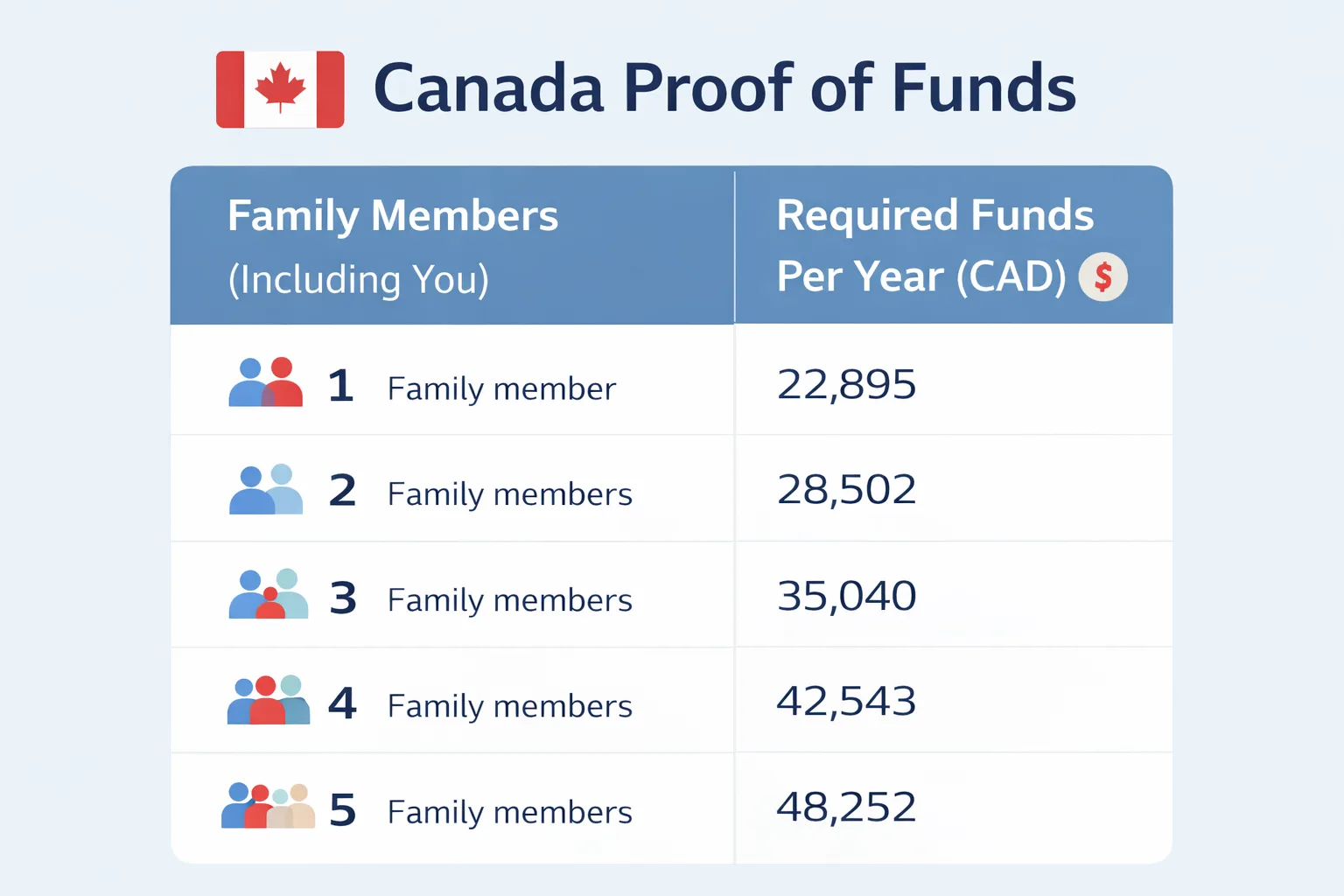
IRCC Proof Of Funds Amounts (Outside Quebec)
IRCC publishes a table of the minimum funds needed per year (excluding tuition and transportation). For 1 person, the amount shown is CAD $22,895.
Quebec Applicants
If your program is in Quebec, IRCC notes that Quebec has its own process (CAQ) and financial expectations can differ from other provinces.
(Because Quebec rules can change, always align your SOP funds section to the latest CAQ + IRCC figures for your submission date.)
What To Explain In Your SOP (Financial Section)
-
Who is sponsoring you (self/parents/relative)
-
Tuition payment status (deposit/full year)
-
Funds source (salary savings, education loan, sponsor income, investments)
-
Why the funding is reliable and liquid
Keep it factual. Your documents prove the numbers; your SOP proves the logic.
5) PAL/TAL Section (Mention It If It Applies)
If your application required a PAL/TAL, your SOP should include one sentence confirming:
-
You have obtained the PAL/TAL for the province/territory of study
-
You understand it’s part of the study permit requirements
IRCC explains that most applicants need a PAL/TAL and provides the “who needs it / exceptions” guidance.
Quick PAL/TAL Checklist (High-Level)| Applicant Type | PAL/TAL Usually Needed? | Notes |
|---|---|---|
| New study permit applicant (most programs) | Yes | IRCC: “Most study permit applicants need a PAL/TAL” |
| Studying in Quebec | Quebec process | CAQ applies |
| Exceptions | Possibly not | Check IRCC PAL/TAL exception list |
6) Home Ties And Temporary Intent
Your SOP must show you have a clear reason to return after studies:
-
Career opportunities in your home country
-
Family responsibility
-
Business/property (only if real and documentable)
-
A realistic plan that does not depend on staying in Canada
Important: Do not fake ties. Weak, unverifiable claims reduce credibility.
7) Study Gaps, Program Switches, Or Refusals (If Applicable)
If you have:
-
a study/work gap,
-
a major program change,
-
a previous visa refusal,
address it directly in 4–8 lines:
-
What happened (truthfully)
-
What you did during that time (work, training, family, medical—only if comfortable sharing)
-
What is stronger now (better program match, clearer career plan, improved funds, stronger documents)
(Other costs like biometrics, medical exams, translations, VAC services can apply depending on your country and situation—always check IRCC instructions for your case.)
SOP Mistakes That Commonly Trigger Refusals
1) Generic SOP (Looks Copied)If your SOP reads like a template, it reduces trust. Officers want a personal, consistent explanation aligned to your documents.
2) Weak “Purpose Of Study”Mismatch between background and program with no strong explanation = credibility issue.
3) Financial Story Doesn’t Match DocumentsFor example: SOP says “self-funded,” but bank statements show sponsor funds with no explanation.
4) PR-Focused LanguageAvoid lines suggesting permanent settlement is the main motive.
5) Missing PAL/TAL When RequiredIRCC clearly states PAL/TAL is required in most cases and applications may be returned without it when needed.
Conclusion:
A strong Canada Study Visa SOP is not a motivational essay. It is a professional, consistent explanation that aligns with IRCC requirements and your documents: LOA, PAL/TAL (if required), proof of funds, and a credible study-to-career pathway.