Recommended Blog Posts
- From Study Permit to PR: How International Graduates Can Actually Make It Happen
- ITA For Canada PR In 2026: What Happens After You Receive Your Invitation To Apply?
- Single-Entry vs. Double-Entry Visa: The Difference That Can Make or Break Your Trip
- K7 Immigration Client Success Story: Achieving Canada Work Permit and PGWP Extension
- What Is COPR in Canada Immigration and What Happens After You Receive It
Moving Your Medical Practice to Canada: NOC Codes 31100, 31101, and 31102 Explained
Publish On: May 11, 2026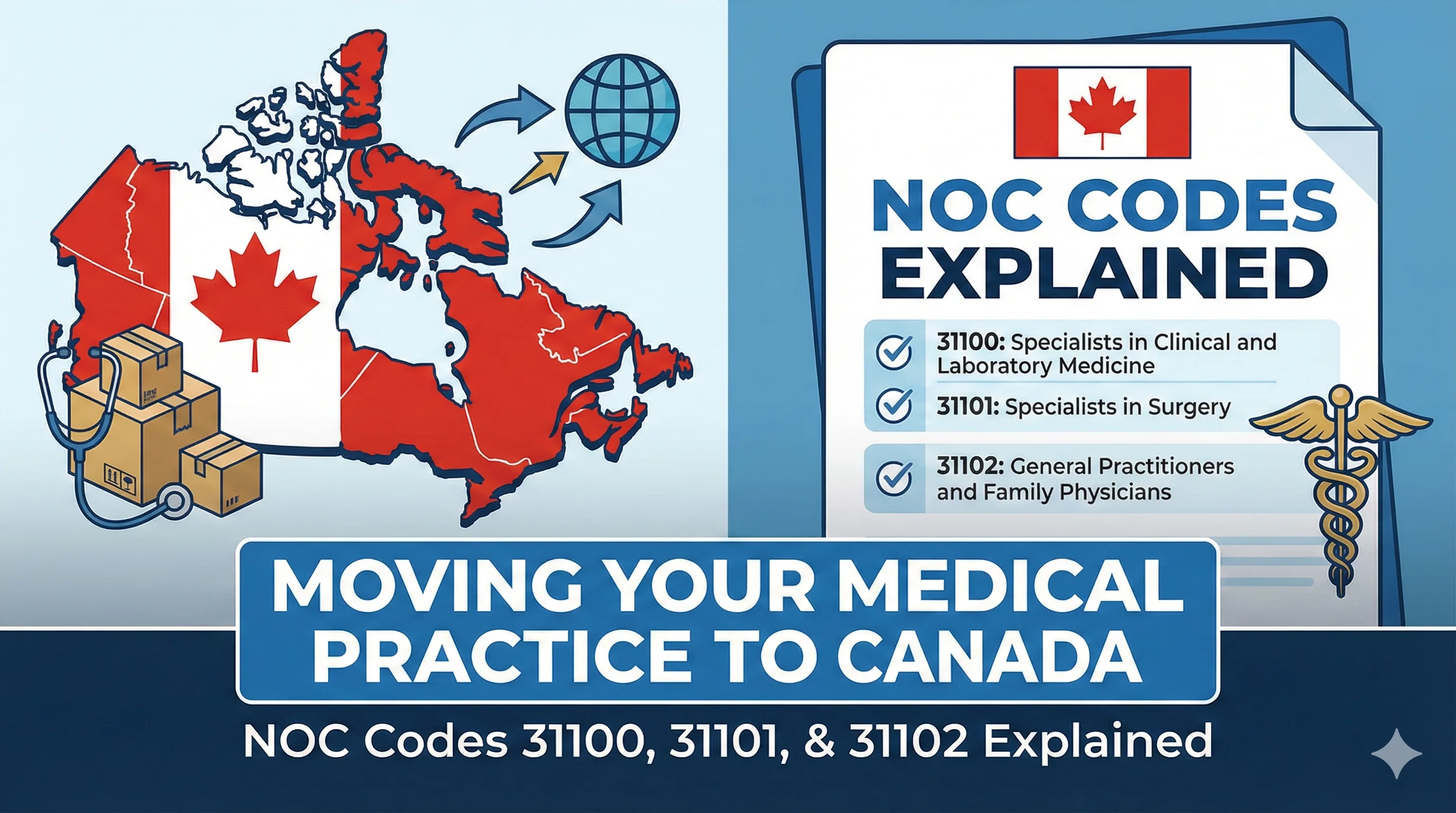
If you are an American physician feeling crushed by the weight of insurance prior authorizations, skyrocketing malpractice premiums, and administrative burnout, you are not alone. A growing number of US-trained doctors are looking north to Canada, where the healthcare system is actively—and aggressively—recruiting medical talent.
With the 2026 rollout of the "Physicians with Canadian Work Experience" Express Entry category, the Canadian government has essentially created a VIP fast-track for doctors. But before you can pack up your stethoscope, you have to decode Canadian immigration jargon. The most important piece of that puzzle? Your NOC Code.
Let’s break down exactly what NOC codes are, translate the three most critical medical codes (31100, 31101, and 31102) into US equivalents, and show you why getting this right is the key to your Canadian Permanent Residency (PR).
What Is a NOC Code?
The National Occupational Classification (NOC) is Canada’s standardized system for evaluating and classifying every job in the country. Immigration, Refugees and Citizenship Canada (IRCC) uses this system to determine if your work experience qualifies for specific immigration programs.
All physician roles fall under TEER 1 (occupations that usually require a university degree and extensive professional training). For the highly coveted 2026 targeted Healthcare Express Entry draws, you must prove that your US residency and clinical experience align perfectly with one of three specific codes.
The "Big Three" Physician NOC Codes
To ensure your Express Entry profile doesn't get rejected on a technicality, you need to match your specific medical specialty to the correct code.
1. NOC 31100: Specialists in Clinical and Laboratory Medicine
This is a massive category that catches almost all non-surgical specialists. These professionals diagnose and treat diseases, act as consultants to other doctors, and often work in hospital settings, academic health science centers, or private clinics.
Common US Specialties in This Code:
- Anesthesiologists
- Internal Medicine (Internists)
- Psychiatrists
- Pediatricians
- Cardiologists & Neurologists
- Pathologists & Radiologists
- Hospitalists
2. NOC 31101: Specialists in Surgery
If you spend your days in the OR performing or supervising surgical procedures to correct deformities, repair injuries, or treat diseases, this is your lane. Canada is facing a massive shortage of surgical specialists due to retiring baby boomers, making this a highly prioritized code for both federal and provincial immigration.
Common US Specialties in This Code:
- General Surgeons
- Orthopedic Surgeons
- Obstetricians and Gynecologists (OB/GYNs)
- Neurosurgeons & Cardiac Surgeons
- Ophthalmologists
- Urologists
3. NOC 31102: General Practitioners and Family Physicians
Primary care is the absolute foundation of the Canadian healthcare system, and the country is currently experiencing a structural shortage of family doctors. General Practitioners (GPs) provide continuous, primary healthcare, manage chronic conditions, and act as the gateway to specialists.
Common US Specialties in This Code:
- Family Medicine Physicians
- Primary Care Physicians (PCPs)
- General Practice Residents
At-a-Glance: The US to Canada Physician Translation Table
To help you visualize where you fit in and what to expect financially, here is a breakdown comparing these three vital NOC codes.
Note for US Readers: The estimated Canadian salaries below have been converted to USD for easy comparison. Keep in mind that Canadian doctors do not pay for massive malpractice insurance premiums or heavy billing administration teams out of these gross earnings.
| Canadian NOC Code | Broad Category | Typical US Equivalent Titles | Est. Median Salary (USD) | 2026 Demand in Canada |
|---|---|---|---|---|
| NOC 31100 | Clinical & Lab Specialists | Internists, Anesthesiologists, Psychiatrists, Pathologists | $180,000 - $350,000+ | Extremely High |
| NOC 31101 | Specialists in Surgery | General Surgeons, OB/GYNs, Orthopedic Surgeons | $200,000 - $400,000+ | Extremely High |
| NOC 31102 | General & Family Practitioners | Family Medicine Doctors, Primary Care Physicians (PCPs) | $160,000 - $250,000+ | Critical Shortage |
Why Getting Your NOC Code Right Matters in 2026
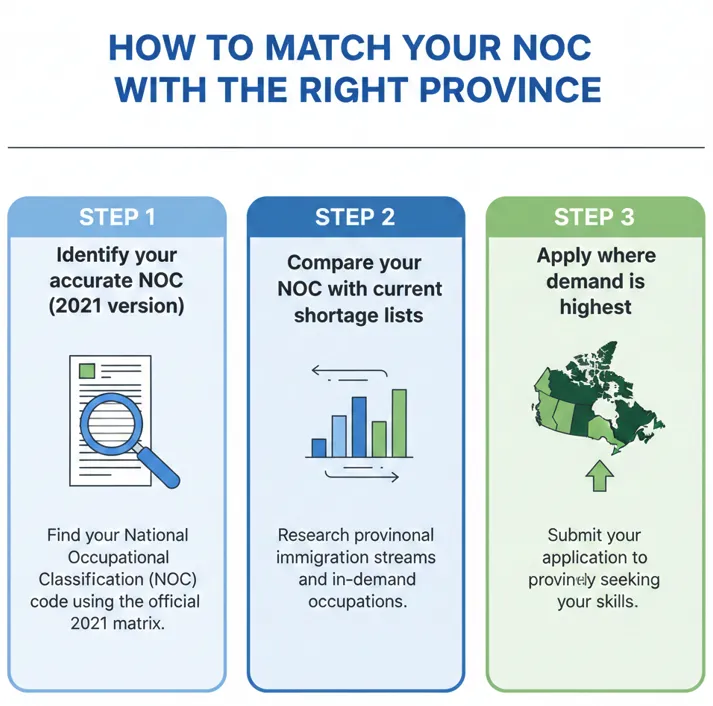
You might be thinking, "I'm a doctor; obviously Canada wants me. Does the specific code really matter?" Absolutely. Here is why:
- The 2026 Targeted Draws: In early 2026, IRCC launched the new Physicians with Canadian Work Experience Express Entry category. If you secure a temporary work permit and practice in Canada for just 12 months under one of these three exact codes, you qualify for specialized immigration draws. These draws have seen Comprehensive Ranking System (CRS) score cut-offs drop to historic lows (around 169), essentially guaranteeing PR for eligible doctors.
- Expedited Work Permits: If you have a job offer falling under 31100, 31101, or 31102, your temporary work permit application is now eligible for a 14-day priority processing time.
- Provincial Nominee Programs (PNPs): Provinces have specific quotas to fill. The Nova Scotia Latest PNP Draw is desperately seeking NOC 31102 (Family Doctors), having your profile perfectly aligned with that code could result in an instant provincial nomination, which adds 600 points to your Express Entry profile.
The Bottom Line
Moving your medical practice to Canada requires a bit of upfront administrative work, but the payoff—a healthier work-life balance, high compensation without the US insurance headaches, and an immediate path to permanent residency—is immense.
Because matching your US residency and fellowship experience to the exact duties of a Canadian NOC code can sometimes be tricky, many doctors seek professional guidance to avoid costly application delays.