Recommended Blog Posts
- TEER Categories in Canada: How TEER 0, 1, 2, 3, 4 and 5 Affect Your PR Options
- High-Demand NOC Codes In Canada For PR In 2026
- Urologist Jobs (NOC 31101.04) in Canada: Provinces With Shortages, Expected Earnings, and Hiring Trends -2026 Guide
- Welder (NOC 72106, TEER 2) Canada PR After PGWP: Best Options for International Graduates
- NOC Code List: Why NOC Codes Matter for Immigration (2026 Update)
Why Canada Needs Experienced General Surgeons (NOC - 31101) In 2026: Demand, Salaries, And Fast-Track PR Options
Publish On: March 03, 2026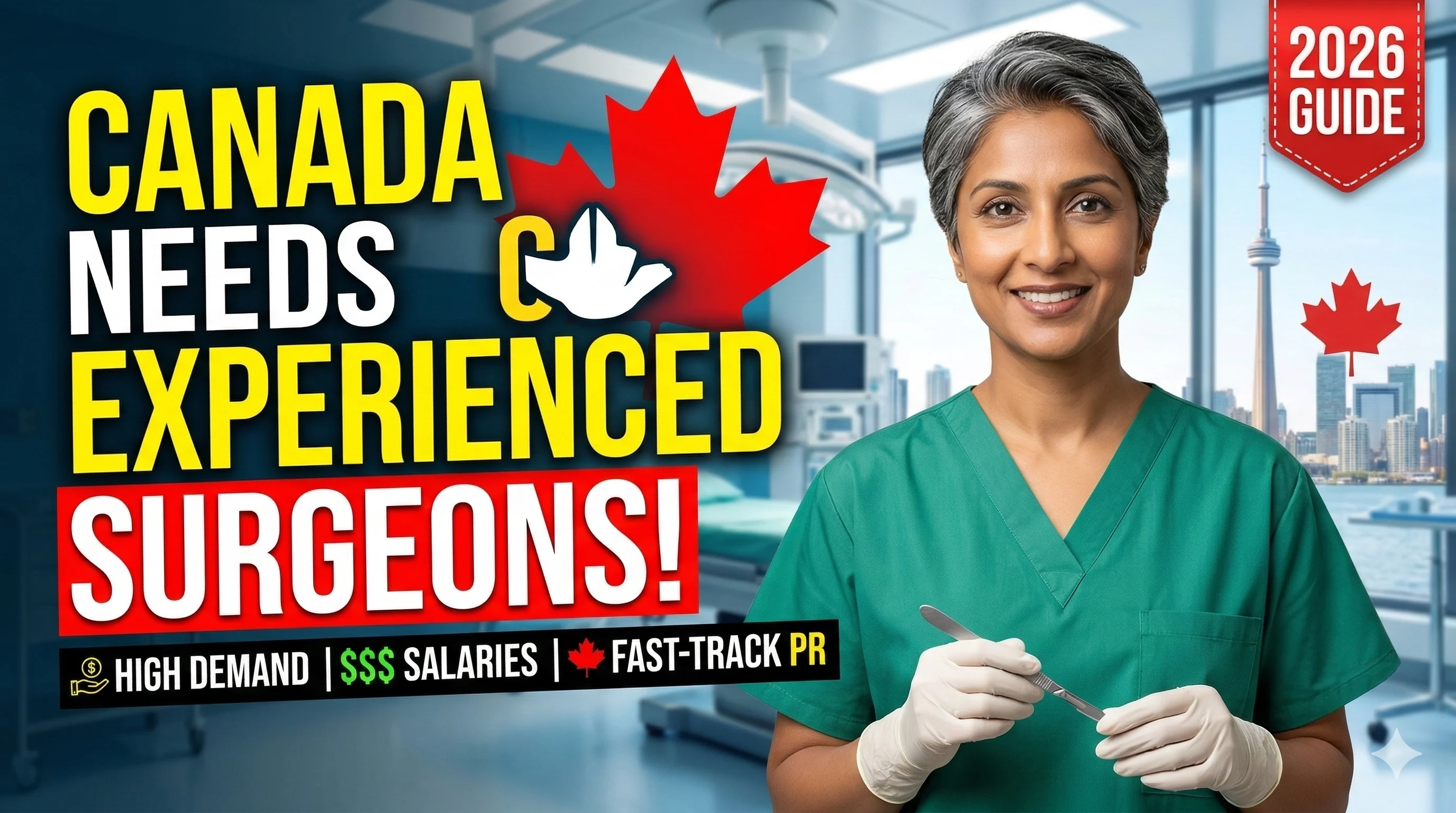
Canada’s healthcare system is undergoing a structural shift. Hospitals are expanding surgical capacity, the population is aging quickly, and thousands of experienced physicians are approaching retirement. For experienced general surgeons, this moment represents both a professional opportunity and a strategic immigration pathway.
Canada’s Surgical Workforce Gap Is Growing
The shortage of physicians in Canada is no longer a theoretical policy issue—it is a measurable workforce crisis affecting hospitals across the country.
Several national indicators highlight the scale of the problem.
| Key Healthcare Workforce Indicators | Latest Data |
|---|---|
| Projected physician shortage (2024-2033) | 26,800 doctors |
| Expected specialist physician gap by 2031 | 5,800 specialists |
| Canadians without a regular doctor | ~6.5 million people |
| Physician density | 2.8 doctors per 1,000 people |
| OECD average physician density | 3.7 doctors per 1,000 people |
Canada simply does not train enough physicians domestically, producing about 7.5 new medical graduates per 100,000 people—roughly half the OECD average.
At the same time, surgical demand continues to rise as populations age and chronic disease rates increase. For hospitals, this means longer surgical waitlists and increasing pressure on operating rooms.
Why General Surgeons Are Particularly Critical
Unlike highly specialized surgical fields, general surgeons play a central role in regional hospitals and emergency systems.
Their responsibilities often include:
- Trauma and emergency surgery
- Gastrointestinal surgery
- Hernia and abdominal procedures
- Cancer-related surgical interventions
- Critical surgical triage in rural hospitals
General surgeons are especially important outside major cities. Yet rural distribution remains uneven.
| Practice Location | Share Of Surgeons |
|---|---|
| Major cities | ~71% |
| Mid-size communities | ~14% |
| Rural communities | ~7% |
Rural hospitals frequently depend on temporary surgeons or visiting specialists, creating a major gap in permanent surgical coverage. For experienced foreign surgeons willing to work in Canadian regional areas, this shortage translates into significantly faster employment and immigration pathways.
NOC Code For Surgeons In Canada
Under the NOC 2021 classification, surgeons fall under a specific category used for immigration and labour market analysis.
| Occupation | NOC Code | TEER Level |
|---|---|---|
| Specialist Physicians (including surgeons) | 31101 | TEER 1 |
This classification covers professionals who:
- Diagnose diseases
- Perform surgical procedures
- Manage pre- and post-operative care
- Work in hospitals, trauma centres, and specialty clinics
This NOC category is eligible under Express Entry, Provincial Nominee Programs, and healthcare category draws.
Salary Expectations For General Surgeons In Canada
Canada offers competitive physician compensation compared to many developed countries.
The average gross income for general surgeons is among the highest across medical specialties.
| Specialty | Average Annual Income (CAD) |
|---|---|
| General Surgery | $571,000 |
| Cardiology | $566,000 |
| Dermatology | $520,000 |
| Orthopedic Surgery | $538,000 |
Average physician income across all specialties sits around $422,000 annually, highlighting how surgical specialties command higher compensation. However, compensation varies by province due to billing structures and hospital demand.
Provinces With High Earnings Potential
| Province | Typical Demand Level |
|---|---|
| Ontario | Very High |
| Alberta | High |
| Nova Scotia | High |
| Saskatchewan | High |
| Manitoba | Moderate-High |
Many provinces also offer relocation incentives, signing bonuses, and rural practice incentives for surgeons.
IRCC’s Healthcare Immigration Strategy (2026)
Canada has recognized that immigration is essential to solving its healthcare workforce shortage. Recent policy changes directly benefit surgeons and other physicians.
Key Federal Measures
| Policy | Details |
|---|---|
| Dedicated healthcare immigration category | Express Entry draws targeting healthcare workers |
| Reserved physician nomination spaces | 5,000 federal admissions allocated to provinces |
| Fast-track work permits | 14-day processing for nominated physicians |
| Provincial support programs | Credential recognition and rural recruitment |
These measures aim to attract practice-ready doctors globally, particularly in specialties where shortages are severe. For foreign surgeons, this dramatically shortens the pathway from job offer to permanent residence.
Express Entry Draws For Healthcare Professionals
Healthcare-specific Express Entry rounds have become increasingly common. Recent trends show:
| Draw Type | Typical CRS Range |
|---|---|
| Healthcare Category Draw | 460-475 |
| General Draw | 500+ |
| PNP Draw | 700+ (includes nomination points) |
Healthcare draws allow surgeons to compete only against other healthcare professionals, improving their chances of receiving an Invitation to Apply (ITA). This targeted selection model reflects Canada’s broader strategy of aligning immigration with labour shortages.
Provincial Nominee Programs Targeting Surgeons
Provincial immigration programs play a crucial role in recruiting surgeons for hospitals outside major cities.
Provinces Actively Recruiting Surgeons
| Province | Program |
|---|---|
| Ontario | OINP Employer Job Offer |
| British Columbia | BC PNP Health Authority Stream |
| Nova Scotia | Physician Stream |
| Saskatchewan | Health Talent Pathway |
| Manitoba | Skilled Worker Overseas |
These programs typically require:
- A hospital or health authority job offer
- Medical licensing eligibility
- Specialist training in surgery
Once nominated, candidates receive 600 CRS points, almost guaranteeing an Express Entry invitation.
Surgical Backlogs Are Driving Recruitment
Canada’s healthcare system is still addressing the surgical backlog created during the pandemic and years of limited surgical capacity.
Government investments now aim to:
- Increase operating room capacity
- Reduce surgical waitlists
- Expand specialist recruitment
Billions of dollars in federal healthcare funding have been allocated to modernize surgical infrastructure and reduce procedure backlogs. This funding translates into new surgical positions and expanded recruitment for experienced surgeons.
Study And Work Pathways For Foreign Surgeons
Not every surgeon enters Canada directly through PR programs. Many follow a staged pathway involving licensing and Canadian work experience.
Common Entry Routes
| Pathway | Who It Fits |
|---|---|
| Express Entry Healthcare Draws | Surgeons with strong CRS profiles |
| Provincial Nominee Programs | Surgeons with hospital job offers |
| Physician Work Permits | International medical graduates |
| Fellowship Or Residency | Surgeons seeking Canadian credentials |
To practice independently, physicians must obtain certification from the Royal College of Physicians and Surgeons of Canada and provincial licensing bodies. While licensing can be complex, provinces increasingly support foreign doctors through bridging programs and mentorship initiatives.
Unique Insight: Why Canada Is Recruiting U.S. Surgeons
In recent years, Canada has quietly increased recruitment efforts targeting American physicians.
Several factors drive this trend:
- Work-life balance differences
- Lower malpractice insurance costs
- Universal healthcare environment
- Growing physician burnout in the U.S.
Canadian hospitals see U.S.-trained surgeons as practice-ready candidates who require minimal credential conversion.
This has made American surgeons particularly attractive in targeted recruitment programs.
Final Thoughts
For experienced general surgeons looking abroad, Canada offers a rare combination of strong demand, competitive income, and immigration pathways aligned with labour shortages.
Few professions enjoy such direct alignment between workforce demand and immigration policy. Between targeted healthcare draws, expanded provincial nominations, and fast-track work permits, the pathway from international surgeon to Canadian permanent resident has never been clearer. For many surgeons around the world particularly in the United States and internationally trained physicians—the next operating theatre might not just be in a new hospital.
It might be in Canada.