Recommended Blog Posts
- TEER Categories in Canada: How TEER 0, 1, 2, 3, 4 and 5 Affect Your PR Options
- Electrician Work Permit to PR in Canada: What Changes After 1 Year of Experience?
- Why Canada Needs Experienced General Surgeons (NOC - 31101) In 2026: Demand, Salaries, And Fast-Track PR Options
- NOC Code List: Why NOC Codes Matter for Immigration (2026 Update)
- How to Get Canada PR as an Electrician (NOC -72200) in 2026: The Ultimate Guide
Why Canada Is A Top Destination For Orthopedic Surgeons: High Demand, Strong Pay, And Long-Term Stability
Publish On: March 05, 2026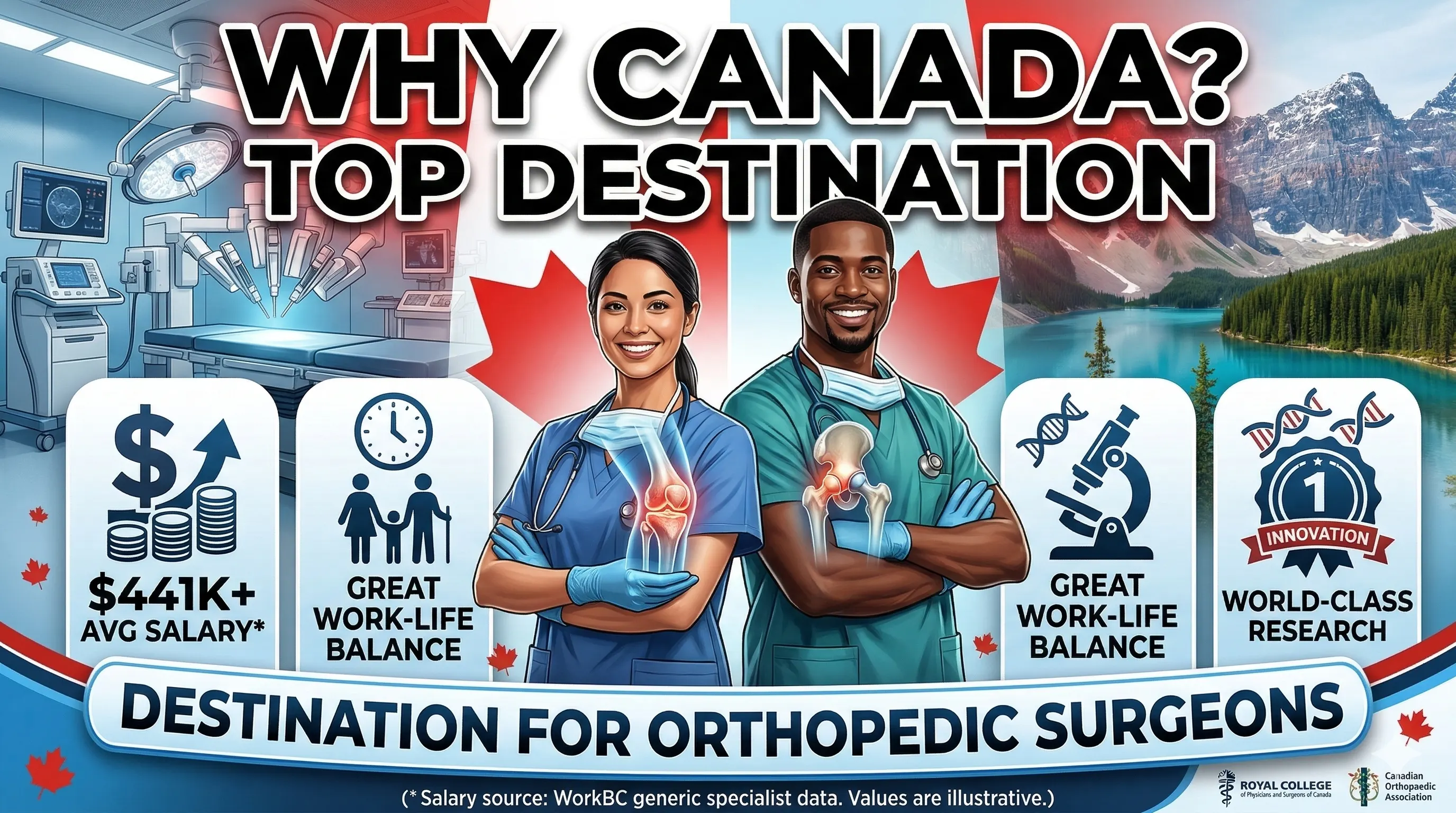
Canada’s healthcare system is entering a phase of structural expansion. Hospitals are investing heavily in surgical capacity, the population is aging, and demand for musculoskeletal care continues to rise. For experienced orthopedic surgeons, this shift is creating an unusual combination of professional opportunity and immigration accessibility.
In recent years, Canada has introduced targeted immigration draws for healthcare professionals, expanded provincial physician recruitment programs, and adjusted immigration rules to prioritize workers in Healthcare and Social Services Occupations.
Orthopedic surgeons sit at the center of this transformation.
For internationally trained specialists looking for long-term career stability and a pathway to permanent residence, Canada is quickly becoming one of the most attractive destinations.
Canada’s Growing Demand For Orthopedic Surgeons
Musculoskeletal disorders represent one of the fastest-growing healthcare burdens in developed countries. In Canada, this trend is amplified by population aging, sports injuries, and increasing rates of arthritis.
Orthopedic surgeons perform procedures that directly impact quality of life—from joint replacement to trauma reconstruction. Several national indicators reveal why hospitals are expanding orthopedic capacity.
| Healthcare Indicator | Latest Canadian Data |
|---|---|
| Canadians aged 65+ | ~20% of population |
| Annual hip and knee replacements | 130,000+ |
| Waitlist growth since pandemic | Significant increase |
| Physicians nearing retirement | ~25% within 10 years |
Orthopedic surgery is among the specialties most affected by surgical waitlists. Patients often wait months or even years for procedures such as knee replacements or spinal surgeries. As a result, provinces are actively recruiting international surgeons to expand surgical capacity.
Orthopedic Surgeons Fall Under Canada’s Healthcare Priority Occupations
Canada’s immigration system increasingly aligns with labour shortages. Under NOC 2021, orthopedic surgeons are categorized within specialist physician roles.
| Occupation | NOC Code | TEER Level |
|---|---|---|
| Specialist Physicians (including orthopedic surgeons) | 31101 | TEER 1 |
This classification places orthopedic surgeons within Healthcare and Social Services Occupations, which are now prioritized in Canada’s targeted immigration strategy. These occupations are often selected in category-based Express Entry draws, improving the chances of receiving an Invitation to Apply (ITA).
Healthcare And Social Services Occupations Are Now Immigration Priorities
In recent years, Canada introduced category-based immigration draws to address workforce shortages in specific sectors. Healthcare has consistently remained one of the highest priority categories.
These draws target professionals such as:
| Priority Healthcare Occupations |
|---|
| Physicians and surgeons |
| Registered nurses |
| Physiotherapists |
| Dentists |
| Medical laboratory technologists |
| Pharmacists |
For surgeons, this shift is important because they are no longer competing solely in large general Express Entry draws. Instead, they may be selected within Healthcare and Social Services Occupations draws, where the candidate pool is smaller and more aligned with Canada’s labour needs.
Express Entry Healthcare Draws Are Opening Doors For Surgeons
Category-based selection rounds have become a key pathway for medical professionals. Recent trends show that healthcare draws often require lower CRS scores than general draws, giving specialists an advantage.
| Express Entry Draw Type | Typical CRS Range |
|---|---|
| Healthcare Category Draw | 460-480 |
| General Draw | 500+ |
| PNP Draw | 700+ (with nomination points) |
For orthopedic surgeons with strong credentials and English proficiency, these draws significantly improve the probability of receiving an invitation for Canadian permanent residence (PR).
Physicians With Canadian Work Experience Have A Strong Advantage
Canada has also introduced policies designed to retain physicians who already work in the country. Immigration streams increasingly recognize Physicians With Canadian Work Experience.
This includes doctors who gained experience through:
- Fellowship programs
- Clinical practice positions
- Hospital employment
- Residency programs
Canadian experience can significantly boost an Express Entry profile because it contributes additional Comprehensive Ranking System (CRS) points. It also strengthens eligibility for provincial immigration streams targeting doctors already integrated into provincial healthcare systems.
Orthopedic Surgeon Salaries In Canada
Orthopedic surgery is among the highest-earning medical specialties in Canada. Compensation is typically structured through a mix of provincial billing systems, hospital payments, and procedural fees.
| Medical Specialty | Average Annual Income (CAD) |
|---|---|
| Orthopedic Surgery | $520,000 – $600,000 |
| Cardiology | $550,000 |
| General Surgery | $570,000 |
| Dermatology | $520,000 |
Income varies depending on:
- Province
- Surgical volume
- Hospital contracts
- Subspecialty expertise
Surgeons practicing in rural or underserved regions may also receive financial incentives and relocation bonuses.
Provinces Actively Recruiting Orthopedic Surgeons
Provincial governments play a major role in recruiting healthcare professionals. Many provinces operate dedicated physician immigration streams.
| Province | Recruitment Program |
|---|---|
| British Columbia | BC PNP Health Authority Stream |
| Ontario | OINP Employer Job Offer |
| Nova Scotia | Physician Stream |
| Saskatchewan | Health Talent Pathway |
| Manitoba | Skilled Worker Overseas |
Hospitals and health authorities frequently sponsor surgeons through these programs to fill long-standing workforce gaps. Once nominated, applicants receive 600 additional CRS points, almost guaranteeing permanent residence through Express Entry.
Surgical Backlogs Are Driving Long-Term Demand
Canada’s healthcare system is still addressing surgical delays that accumulated during the pandemic. Orthopedic procedures were particularly affected because they are often classified as non-emergency surgeries. Today, federal and provincial governments are investing billions to reduce these waitlists.
Healthcare funding priorities include:
- Expanding operating room capacity
- Recruiting more surgical specialists
- Increasing orthopedic procedure availability
This investment ensures long-term demand for orthopedic surgeons, especially in provinces with aging populations.
Licensing Pathways For International Orthopedic Surgeons
Before practicing independently, orthopedic surgeons must complete professional licensing requirements.
This typically involves:
- Credential assessment
- Certification from the Royal College of Physicians and Surgeons of Canada
- Provincial medical licensing
Many provinces now support internationally trained doctors through bridging programs and mentorship initiatives, designed to accelerate workforce integration.
Why Canada Appeals To U.S. Orthopedic Surgeons
In recent years, Canada has become increasingly attractive for American physicians. Several structural differences influence this trend.
| Factor | Canada | United States |
|---|---|---|
| Malpractice insurance costs | Lower | Higher |
| Administrative burden | Moderate | Very high |
| Healthcare system | Universal | Insurance-based |
| Physician immigration pathways | Increasingly open | N/A |
Canadian hospitals often prefer U.S.-trained physicians because their training is comparable and credential recognition is easier. This makes American orthopedic surgeons particularly competitive candidates for immigration and recruitment programs.
Long-Term Stability For Orthopedic Careers In Canada
The long-term outlook for orthopedic surgeons remains exceptionally strong. Several demographic and healthcare trends support continued demand.
| Long-Term Driver | Impact |
|---|---|
| Aging population | Increased joint replacement demand |
| Sports injuries | Growing orthopedic procedures |
| Chronic musculoskeletal disease | Higher surgical volumes |
| Physician retirements | Workforce shortages |
These structural factors ensure orthopedic surgeons will remain among the most valuable healthcare professionals in Canada’s labour market.
Final Thoughts
Canada’s immigration and healthcare policies are increasingly aligned. The country needs skilled medical professionals, and orthopedic surgeons are among the most sought-after specialists. Between Healthcare and Social Services Occupations draws, Express Entry healthcare categories, provincial physician streams, and opportunities for physicians with Canadian work experience, the pathway to permanent residence has become clearer than ever.
For experienced orthopedic surgeons seeking career growth, high earnings, and long-term stability, Canada offers something rare in global healthcare: