Recommended Blog Posts
Practical Tips for a Successful PRTD Application | 2026
Publish On: June 22, 2026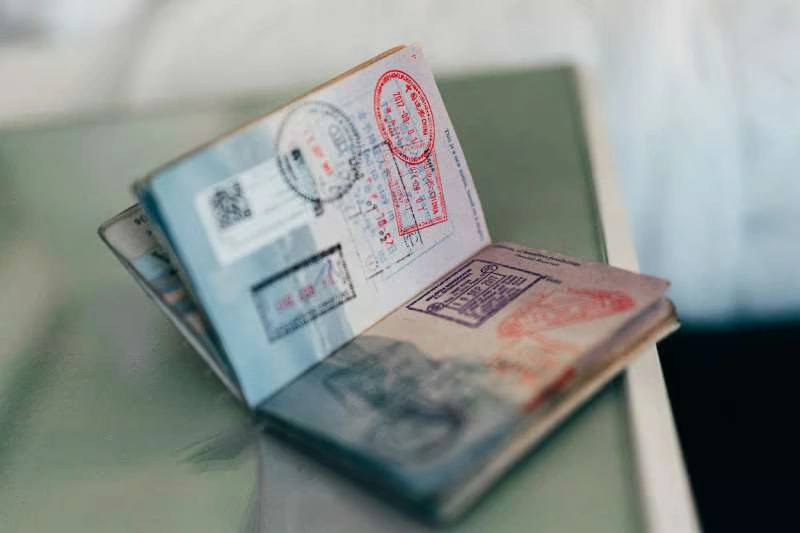
Your PR card is expired. Or lost. Or stolen — and you're already outside Canada. Airlines won't let you board without proof of your permanent resident status, and the clock is ticking on your travel date. This is exactly the situation the Permanent Resident Travel Document (PRTD) was designed to solve.
What Is a Permanent Resident Travel Document (PRTD)?
A Permanent Resident Travel Document is a temporary official document issued by Immigration, Refugees and Citizenship Canada (IRCC) that proves your PR status to commercial carriers — airlines, buses, trains, and boats — so you can board transportation back to Canada.
Key facts confirmed by IRCC:
- A PRTD is normally valid for one single entry into Canada only. Once used, it becomes invalid.
- It is typically valid for up to six months from the date of issue, but cannot extend beyond your passport's expiration date.
- It must always be presented alongside your valid, unexpired foreign passport.
- Photos are not required as part of the application (per IRCC's official processing instructions).
Once you land back in Canada, applying for a new PR card should be your very first priority — a PRTD is a one-way bridge, not a long-term travel solution.
Who Needs a Permanent Resident Travel Document?
According to IRCC, you need a PRTD if you:
- Hold valid Canadian permanent resident status
- Are outside Canada
- Do not have a valid PR card showing your status
- Plan to return to Canada by airplane, boat, train, or bus
This typically happens when your PR card has expired, been lost, stolen, or damaged while you were abroad. If you are travelling in a private vehicle you own, borrow, or rent, you may use other documents instead — but for any commercial carrier, the PRTD (or a valid PR card) is mandatory.
Note: If you are considering giving up your permanent resident status and returning only as a visitor, do not apply for a PRTD. Apply instead to voluntarily renounce your PR status directly with IRCC.
PRTD Eligibility: The Residency Obligation
Meeting Canada's residency obligation is the core eligibility test for a PRTD approval. IRCC officers assess whether you have maintained — or have the potential to maintain — your PR status.
If you have been a permanent resident for 5 years or more:
You must demonstrate physical presence in Canada for at least 730 days within the five-year period immediately before you apply.
If you have been a permanent resident for fewer than 5 years:
You must show that you will be able to meet the 730-day threshold within five years of the date you first became a permanent resident.
The 730 days do not need to be consecutive — they are cumulative. However, every day counts, and IRCC has access to entry and exit data shared with border agencies in other countries. Any discrepancy between your declared dates and border records can result in serious consequences.
What if you don't meet the residency obligation?
Immigration officers have the discretion to approve a PRTD on Humanitarian and Compassionate (H&C) grounds — for example, serious illness, the best interests of a dependent child, or other exceptional personal circumstances. If you are in this situation, professional RCIC representation is strongly recommended before you apply.
PRTD Fee and Forms: What You'll Need
The current PRTD application fee is $50 CAD per person. This fee is non-refundable once IRCC begins processing your application. Pay online through the IRCC payment system and retain your receipt — it must be included with your application.
A complete application must be submitted individually for each family member who needs a PRTD, regardless of age.
Required Forms
| Form | Purpose |
|---|---|
| IMM 5444 | Application for a Permanent Resident Card or PRTD — the main form |
| IMM 5644 | Document checklist — must be included with your application |
| IMM 5476 | Use of a Representative (if using an RCIC or lawyer) |
| IMM 5475 | Authority to release information to a designated individual (if applicable) |
China applicants: If you hold a Chinese passport and are applying from China, you must include an "Inquiry of Exit & Entry Record" from the local Public Security Bureau, covering the past five years, translated into English or French.
How to Apply for a PRTD: Step-by-Step
IRCC now strongly recommends applying online through the Permanent Residence Portal. Paper applications via a Visa Application Centre (VAC) remain available if you cannot apply online.
Step 1 — Read the Instruction Guide
Download and carefully read IMM 5529 — IRCC's official guide to the PRTD application. This guide contains the most current requirements and will flag any recent policy changes.
Step 2 — Gather Your Documents
Using the IMM 5644 checklist, collect everything required to prove your PR status and residency obligation compliance. Think of this as building your evidential case:
- Valid foreign passport (unexpired)
- Evidence of your 730 days of physical presence (flight records, employment letters, bank statements, tax returns, school records, lease agreements)
- Any explanatory letters if you have gaps in your residency
- H&C supporting documents if you are applying under compassionate grounds
Step 3 — Complete IMM 5444
Fill out the application form inside the portal if applying online. If applying on paper, download the form, click "Validate" before printing, then sign in ink. Ensure every question is answered fully — partial applications are returned without processing.
Step 4 — Pay the $50 Fee
Pay online and download/print your payment receipt. This receipt must accompany your submission.
Step 5 — Submit
Online: Upload all forms, documents, and your payment receipt through the Permanent Residence Portal.
Paper: Contact your nearest VAC to confirm whether they accept paper applications by mail or in person before submitting.
PRTD Processing Time
IRCC states that all PRTD applications are processed on a priority basis, meaning they are given preference over many other application types. However, processing times still vary based on:
- Completeness of the application
- Volume of applications received at your visa office
- Whether additional information is requested
- How quickly you respond to any IRCC follow-up requests
There is no fixed published timeline. The most current processing estimates can be found using IRCC's processing time tool. This is precisely why starting your application as early as possible — at least six to eight weeks before your planned travel date — is the single most important thing you can do.
Urgent PRTD Processing
If your travel is within five days, IRCC offers an urgent processing stream for qualifying situations, including:
- Serious illness of a family member
- A lost or stolen PR card discovered close to a travel date
- Death of a family member requiring immediate travel
How to flag your application as urgent:
- Online portal: Check "Yes, my request is urgent" when submitting.
- Paper application: Write "Urgent" on the outside of your envelope.
- In both cases, include a cover letter explaining the urgency and your travel date, supported by documentation (e.g., a medical letter, death certificate, or airline booking confirmation).
IRCC does not guarantee that urgent applications will be processed in time — but flagging correctly and providing strong supporting documents maximises your chances.
8 Expert Tips for a Successful PRTD Application
These are the patterns RCIC Satnam Singh Kahlon has observed across hundreds of PRTD files:
1. Build a Residency Timeline First
Before filling out a single form, create a chronological spreadsheet of every entry and exit from Canada over the relevant five-year period. Match each trip to a supporting document: a flight itinerary, a bank statement from a Canadian account showing activity, an employer letter confirming your work dates. This timeline becomes the spine of your application.
2. Over-Document — Always
The minimum document requirements are exactly that — the minimum. An officer who sees a "thin" file will issue a Request for Information (RFI), which can pause your application for weeks. A comprehensive file, by contrast, makes it easy for an officer to say yes. Include everything relevant.
3. Be Scrupulously Accurate About Dates
IRCC has access to cross-border entry and exit data shared by partner countries, including the United States. If you estimate a travel date — even by one day — and it conflicts with government records, this can be characterised as misrepresentation, which carries a five-year ban and potential PR status loss. If you genuinely cannot confirm a date, explain this in a letter of explanation rather than guessing.
4. Make Passport Stamps Legible
Scan all passport identity pages and stamp pages at high resolution. If an officer cannot read the date on a stamp, those days cannot be counted toward your 730. If stamps are faded or smudged, include a supplementary letter of explanation with alternate evidence for that travel period.
5. Keep a Mirror File
Save a complete copy of every document and every form you submit. If IRCC contacts you six weeks later with a follow-up question, you need to know exactly what you told them. Inconsistencies between your original submission and your follow-up responses raise red flags.
6. Apply Online, Not by Paper
The online Permanent Residence Portal is faster, more reliable, and allows you to track your application status. Paper submissions to a VAC introduce postal delays and the risk of physical document loss or damage.
7. If You're Outside Canada Over Three Years — Seek Representation
If you have been absent from Canada for more than three years, if you are relying on H&C grounds, or if your residency obligation is borderline, the stakes are too high for a DIY application. A licensed RCIC can frame your narrative in a way that aligns with current legal precedent and maximises your approval prospects.
8. Plan Proactively Going Forward
The best PRTD situation is the one you're already prepared for. After returning to Canada, renew your PR card immediately. Going forward, maintain a real-time "Travel Log" — note every border crossing with dates, purpose, and supporting documents filed. You should know your 730-day running total at any point in time.
PRTD vs. PR Card: Key Differences
| Feature | PRTD | PR Card |
|---|---|---|
| Validity | Single entry; typically up to 6 months | 5 years (standard) |
| Who can apply | PRs outside Canada without a valid PR card | PRs inside Canada |
| Primary use | Returning to Canada via commercial carrier | Ongoing proof of status; re-entry to Canada |
| Application method | Online (IRCC portal) or via VAC | Online (IRCC portal) |
| Fee | $50 CAD | $50 CAD |
| Processing | Priority basis | Standard (weeks to months) |
Get Expert Help With Your PRTD Application
Satnam Singh Kahlon (RCIC, R708468) and the K7 Immigration Services team have guided hundreds of permanent residents through PRTD applications — including complex cases involving H&C grounds, borderline residency counts, and urgent processing timelines.
If you are outside Canada without a valid PR card, don't navigate this alone. Book a consultation with our team today.
Related reading: