Recommended Blog Posts
- How Your CLB Score Directly Affects Your CRS Score
- Canada PR for Farmers: Your Complete 2026–2027 Roadmap
- Educational Credential Assessment (ECA) - Immigration Steps for International Students
- Atlantic Immigration Program 2026: Canada PR for Skilled Workers and International Graduates
- ITA For Canada PR In 2026: What Happens After You Receive Your Invitation To Apply?
How International Nurses and Medical Scholars Can Get Permanent Residence in Canada?
Publish On: January 05, 2026
Canada has strengthened its focus on healthcare occupations through category-based Express Entry draws, where nurses are being invited separately from general applicants. This has lowered CRS pressure for many nurses compared to all-program draws. At the same time, the 2026–2028 Immigration Levels Plan confirms healthcare as a long-term priority, ensuring sustained PR opportunities rather than short-term policy shifts. Provinces are also actively nominating nurses through PNP healthcare streams, making provincial nomination a powerful pathway for candidates with lower CRS scores.
In parallel, Canada has improved support systems for internationally educated nurses to speed up workforce entry. Programs like PASS (Pre-Arrival Supports and Services) now help nurses with licensing guidance, NCLEX preparation, job readiness, and employer connections even before landing in Canada. IRCC has also refined selection criteria by favouring occupation-specific needs, Canadian experience, and provincial nominations, while reducing emphasis on non-priority pilot programs.
For nurses, this means the PR process is now more targeted, predictable, and aligned with labour shortages, making early NNAS registration, licensing planning, and pathway selection more critical than ever.
Here are the steps you should know before applying for Canada immigration:
Step 1: Credential Recognition (Timeline: 3–6 months)
Before working as a nurse in Canada, you must have your international credentials recognized.
National Nursing Assessment Service (NNAS)
Process:
- Create an account on the NNAS website
- Submit your application and fees
- Request documents directly from nursing schools and licensing bodies
- NNAS evaluates education, registration, and experience
- Receive your NNAS Report (valid for 5 years)
Critical Requirements:
- Documents must come directly from source institutions
- Certified translations are required for non-English/French documents
- Processing time: 3–6 months (may be longer with backlogs)
Provincial Regulatory Body Registration
Each province has its own nursing regulatory body with specific requirements:
| Province | Regulatory Body | Website |
|---|---|---|
| Ontario | College of Nurses of Ontario (CNO) | cno.org |
| British Columbia | British Columbia College of Nurses & Midwives | bccnm.ca |
| Alberta | College of Registered Nurses of Alberta (CRNA) | nurses.ab.ca |
| Quebec | Ordre des infirmières et infirmiers du Québec (OIIQ) | oiiq.org |
| Nova Scotia | Nova Scotia College of Nursing (NSCN) | nscn.ca |
| Manitoba | College of Registered Nurses of Manitoba (CRNM) | crnm.mb.ca |
Step 2: Language Proficiency Testing
- IELTS (International English Language Testing System)
- CELPIP (Canadian English Language Proficiency Index Program)
- TEF (Test d’évaluation de français) for French
Minimum Requirements for Express Entry:
- CLB 7 for most nursing pathways
- Equivalent to IELTS: 6.0 each band (minimum)
Language Proficiency for Provincial Licensing: May have higher requirements than immigration minimums. Check specific provincial regulatory body requirements.
Step 3: Pass Licensing Examinations
For Registered Nurses: NCLEX-RN
Exam Format:
- Computerized Adaptive Testing (CAT)
- 85–150 questions
- 5 hours maximum time
- Pass/Fail result (no numerical score)
2025 Pass Rates:
- North American-educated first-time writers: 88.56%
- Internationally Educated Nurses (IENs) first-time writers: 53.81%
- This highlights the importance of thorough preparation
Registration Process:
- Apply through provincial regulatory body
- Pay application fees (regulatory body + Pearson VUE)
- Receive Authorization to Test (ATT)
- Schedule exam through Pearson VUE
- Take exam at an approved testing center
Important: There is no limit to the number of times you can take the NCLEX-RN exam, though waiting periods apply (minimum 45 days between attempts).
For Licensed Practical Nurses: CPNRE or REx-PN
- CPNRE: Canadian Practical Nurse Registration Examination
- REx-PN: Regulatory Exam – Practical Nurse
Requirements and format vary by province and exam type.
Jurisprudence Examination
Each province requires a jurisprudence exam covering local laws, ethics, and practice standards. These are typically online exams specific to each regulatory body.
Step 4: Educational Credential Assessment (ECA)
For Express Entry applications, you need an Educational Credential Assessment from designated organizations:
- World Education Services (WES)
- International Credential Assessment Service of Canada (ICAS)
- Comparative Education Service - University of Toronto School of Continuing Studies
Timeline: 4–8 weeks
Step 5: Submit Immigration Application
Express Entry Timeline
- Create Express Entry Profile (immediate)
- Enter Candidate Pool (profile valid 12 months)
- Receive Invitation to Apply (ITA) (varies based on CRS score)
- Submit Full Application (60 days from ITA)
- Application Processing (6–8 months)
- Receive Confirmation of Permanent Residence (COPR)
Provincial Nominee Program Timeline
- Apply to Provincial Program (requirements vary)
- Provincial Assessment (2–4 months)
- Receive Provincial Nomination (if successful)
- Apply for Federal PR (within 6 months of nomination)
- Federal Processing (6–8 months)
Total Timeline: 12–18 months from start to PR approval
Nursing Students and International Graduates: Your Path to PR
Studying Nursing in Canada
International students can complete nursing education in Canada, which offers several advantages for permanent residence applications.
Admission Requirements
- High school diploma with Biology, Chemistry, and Math
- Minimum IELTS score: 6.5 overall (typical requirement)
- Statement of Purpose
- Academic references
- Application deadlines: Usually November for Fall intake
Cost of Studying
| Tuition Fees | CAD $14,000–$24,000 per year |
|---|---|
| Living Expenses | CAD $10,000–$12,000 per year |
| Total Budget | CAD $24,000–$36,000 annually |
Pathways from PGWP to Permanent Residence
By gaining at least one year of skilled Canadian work experience, nurses can qualify for Express Entry (Canadian Experience Class) or be targeted under provincial nominee programs (PNPs) focused on healthcare workers. Many provinces actively prioritize nurses, and a PNP nomination adds 600 CRS points, making PR highly achievable. Strong language scores, full-time employment, and in-demand nursing roles significantly speed up the PR process.
1. Express Entry with Canadian Experience Class
Advantages:
- Canadian work experience provides CRS points
- Nursing education from a Canadian institution
- No need for Educational Credential Assessment
- Higher Express Entry selection probability
2. Provincial Nominee Programs for International Graduates
Many provinces have dedicated streams for international graduates:
Ontario:
- Ontario Immigrant Nominee Program (OINP) - International Student Stream
- Must have completed eligible Canadian education
- Job offer in Ontario required
- Fills quickly; apply immediately upon eligibility
British Columbia:
- International Graduate Stream
- Job offer from BC employer required
- Lower wage requirements than other streams
- Express Entry BC option available
Manitoba:
- International Education Stream
- Career Employment Pathway
- Graduate Internship Pathway
- Connection to Manitoba through education
Atlantic Provinces:
- Atlantic Immigration Program
- International Graduate Pathway
- Job offer from a designated employer
- Streamlined process for Atlantic graduates
3. Work Experience → Express Entry
After gaining 1 year of full-time skilled work experience in Canada:
Benefits:
- Significant CRS points for Canadian experience
- Higher likelihood of Express Entry ITA
- Occupation-specific healthcare draws available
- Canadian references strengthen your application
Bridging Programs for Internationally Educated Nurses
If you completed nursing education outside Canada:
Programs Available:
- Registered Nurse Pathway to Canadian Practice (various colleges)
- Clinical competency assessment programs
- Bridging courses for competency gaps
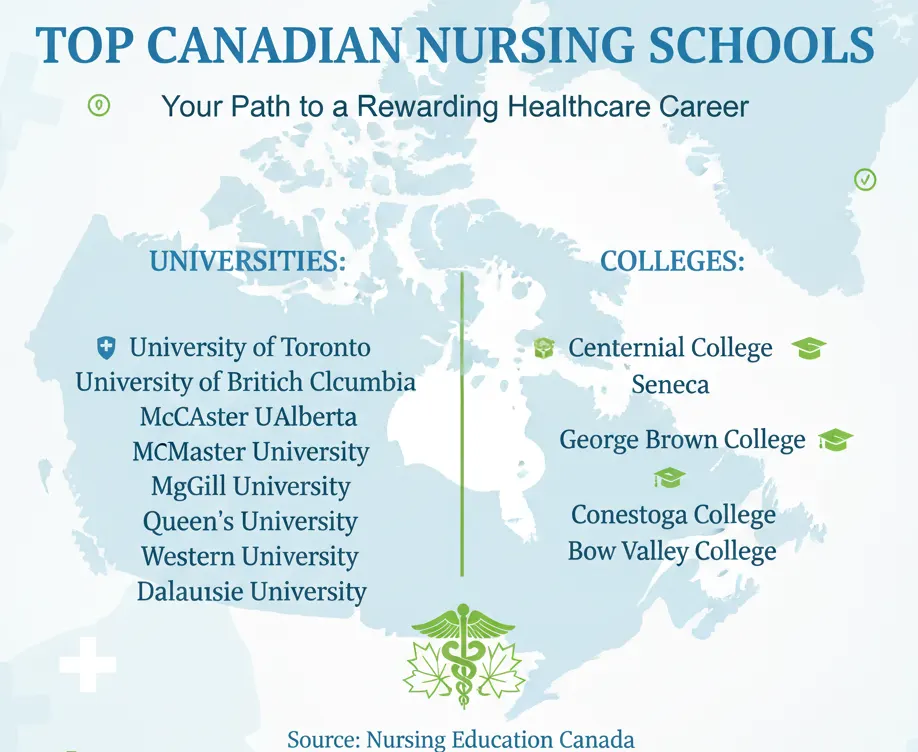
Example: Bow Valley College offers a Registered Nurse Pathway to Canadian Practice certificate for internationally educated nurses to meet Alberta registration requirements.
Support Programs for International Nurses
Pre-Arrival Supports and Services (PASS) Program
Overview:
- Free, government-funded program
- Designed for internationally educated nurses (IENs)
- Virtual delivery from home country
Eligibility:
- Graduated from a recognized nursing program
- Received Confirmation of Permanent Residence from IRCC
Services Provided:
- Sector-specific training and webinars
- Mentorship from experienced Canadian nurses
- Employment support and job search strategies
- Cultural adaptation guidance
- Information on registration and licensure
Conclusion
Canada’s 2026–2028 Immigration Levels Plan solidifies healthcare as a long-term priority, making it an opportune time for international nurses and medical scholars to seek Permanent Residence (PR). The pathway is now more targeted and predictable, offering specialised routes through category-based Express Entry draws and various Provincial Nominee Program (PNP) healthcare streams.
Whether you are an internationally educated nurse (IEN) navigating the NNAS and NCLEX-RN requirements or an international student pursuing a nursing degree in Canada to leverage the Post-Graduation Work Permit (PGWP), success depends on meticulous planning and early registration. By utilising support systems like the PASS program and bridging courses, candidates can streamline their entry into the Canadian workforce and secure their future in a high-demand sector.