Recommended Blog Posts
- Practical Tips for a Successful PRTD Application | 2026
- The Ultimate 2026 Guide: Canada Immigration From the UK
- Why a Good Credit Score Becomes Essential After Your ITA and Landing in Canada (Preparing for 2026)
- Eligibility for Canada Pension Plan (CPP) and Old Age Security (OAS)
- Super Visa Income Requirements 2025-26 | Updated LICO Table & Eligibility Guide
How Young Professionals Can Work in Canada Through IEC
Publish On: April 24, 2026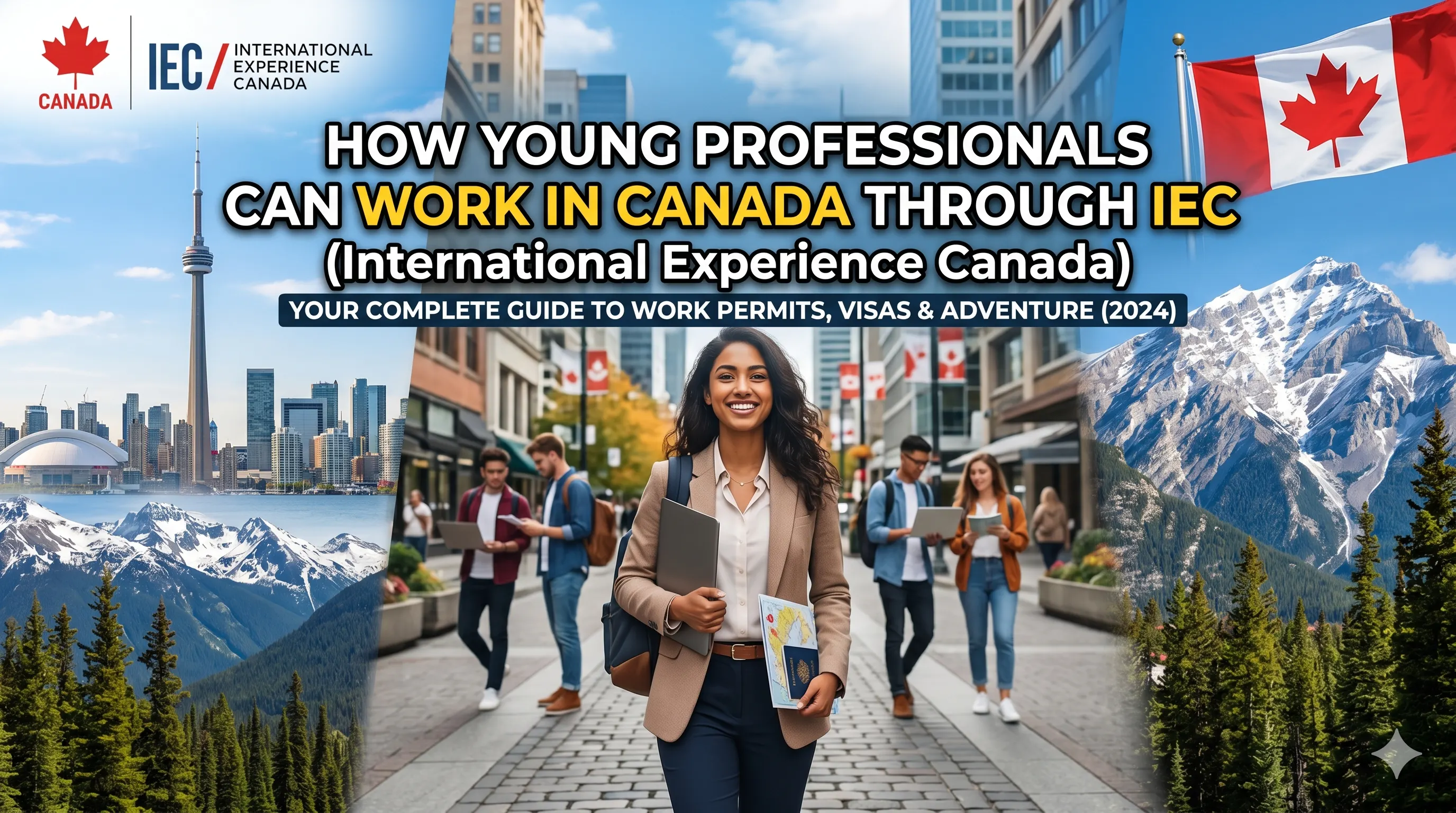
International Experience Canada, commonly known as IEC, is one of the most practical ways for eligible young people to work in Canada temporarily. It allows applicants from partner countries to gain Canadian work experience, explore career opportunities, and understand life in Canada before planning a longer-term immigration pathway.
In 2026, IEC remains especially valuable because it is LMIA-exempt, meaning eligible applicants do not usually need a Labour Market Impact Assessment to participate. For many candidates, this makes IEC a faster and more flexible route compared with traditional employer-driven work permits.
What Is International Experience Canada (IEC)?
International Experience Canada is a Government of Canada program that allows youth from eligible countries and territories to travel and work in Canada. The program is based on youth mobility agreements between Canada and participating countries.
Depending on your country of citizenship, you may be allowed to work in Canada for up to one or two years. The exact duration, age limit, and available work permit category depend on the agreement between Canada and your country.
Why IEC Is One Of The Easiest Ways To Work In Canada In 2026
IEC is attractive because it gives eligible applicants access to Canadian work experience without the complex LMIA process. This can make it easier for young professionals, graduates, and travellers to enter the Canadian job market.
For applicants who want to build a future PR profile, IEC can also be useful because Canadian work experience may later support Express Entry, Canadian Experience Class, or Provincial Nominee Program options.
Key 2026 IEC Program Highlights
The IEC program works through a pool and invitation system. Eligible candidates create a profile, enter the correct pool, and wait for an invitation to apply for a work permit.
| Feature | 2026 Details |
|---|---|
| Program Name | International Experience Canada (IEC) |
| Age Limit | Usually 18 to 30 or 18 to 35, depending on country |
| Main Categories | Working Holiday, Young Professionals, International Co-op |
| LMIA Requirement | Not required under IEC |
| Work Permit Type | Open or employer-specific, depending on category |
| Selection System | Invitation-based pool system |
Who Is Eligible For IEC Canada?
IEC eligibility mainly depends on your country of citizenship, age, passport validity, admissibility, and chosen category. You must be from a country or territory that has a youth mobility agreement with Canada, or you may need to apply through a recognized organization if your country is not directly eligible.
Applicants must also prove they have enough funds, valid health insurance for their stay, and the ability to leave Canada when their authorized stay ends.
- Be a citizen of an IEC-eligible country or use a recognized organization route where available
- Meet the age requirement for your country
- Hold a valid passport for the full intended stay
- Have sufficient settlement funds
- Meet medical, criminality, and admissibility requirements
- Have health insurance for the full duration of stay in Canada
IEC Work Permit Categories Explained
IEC has three major categories. Each category is designed for a different type of applicant, so choosing the correct category is important for approval and long-term planning.
| IEC Category | Work Permit Type | Best For |
|---|---|---|
| Working Holiday | Open Work Permit | Applicants who want flexibility to work for different employers in Canada |
| Young Professionals | Employer-Specific Work Permit | Applicants with a valid job offer related to their career development |
| International Co-op | Employer-Specific Work Permit | Students who need a work placement or internship as part of their studies |
Working Holiday Category
The Working Holiday category is the most flexible IEC option because it usually provides an open work permit. This allows participants to work for most employers in Canada without being tied to one specific job offer.
This category is ideal for applicants who want to travel, explore Canada, gain international work experience, and keep employment options open.
Young Professionals Category
The Young Professionals category is designed for applicants who have a job offer in Canada that contributes to their professional development. Unlike Working Holiday, this category usually results in an employer-specific work permit.
Young professionals moving to Canada through IEC should plan their housing budget before arrival, as rent can take a major share of monthly income. Canada’s rental market has started to ease in 2026, with more supply and softer asking rents in some major cities, but costs still vary widely by province and city.
This option is useful for applicants who already have a Canadian employer and want focused experience in their field.
International Co-op Internship Category
The International Co-op category is for students who need a Canadian internship or work placement as part of their academic program. A job offer or placement offer is usually required before applying.
This route is especially useful for students who want international exposure while completing their education.
Step-By-Step IEC Canada Application Process
The IEC process is competitive because entering a pool does not guarantee an invitation. Applicants should prepare their documents early and respond quickly if invited.
- Check whether your country is eligible for IEC.
- Choose the correct IEC category.
- Create an online profile and enter the IEC pool.
- Wait for an Invitation to Apply.
- Accept the invitation within the required deadline.
- Submit the complete work permit application.
- Provide biometrics if required.
- Wait for processing and final decision.
- Receive a Port of Entry letter if approved.
- Travel to Canada with required documents.
Financial Requirements For IEC Canada
IEC applicants must show that they have enough money to support themselves when they arrive in Canada. This helps prove that the applicant can manage initial expenses while looking for work or settling in.
| Requirement | Purpose |
|---|---|
| Proof of Funds | To show you can support yourself after arrival |
| Health Insurance | Required for the full duration of your stay |
| Return Ticket or Extra Funds | To show ability to leave Canada at the end of stay |
| Initial Living Cost Buffer | Useful for rent, transport, food, and job search period |
Important 2026 IEC Updates You Must Know
IEC remains a competitive program in 2026 because invitation spots are limited by country and category. Applicants should regularly check official IRCC updates, invitation rounds, and quota availability before planning their application.
Health insurance remains an important requirement. If your insurance does not cover the full duration of your intended stay, your work permit may be issued for a shorter period.
Can Indians Apply For IEC Canada?
India is not generally listed as a direct IEC partner country. However, Indian citizens may explore recognized organization routes if available and if they meet that organization’s conditions.
This route can be limited, competitive, and subject to availability, so Indian applicants should review official IRCC recognized organization guidance before making any decision.
IEC Vs Other Work Permits In Canada
IEC is not the same as a standard employer-specific work permit, LMIA-based work permit, or PR pathway. It is a temporary work opportunity that can support long-term planning if used strategically.
| Factor | IEC | LMIA-Based Work Permit | Express Entry |
|---|---|---|---|
| Main Purpose | Temporary work and cultural exchange | Employer-driven temporary work | Permanent residence selection |
| LMIA Required | No | Usually yes | No |
| Job Offer Required | Depends on category | Yes | Not always |
| Age Restriction | Yes | No fixed IEC-style age limit | No fixed age limit, but CRS points reduce with age |
| PR Outcome | Indirect pathway | May support PR later | Direct PR application system |
Can IEC Lead To Permanent Residence (PR)?
IEC does not directly give permanent residence. However, the Canadian work experience gained through IEC may improve future eligibility for immigration programs.
After working in Canada, some candidates may become stronger applicants under Express Entry, Canadian Experience Class, or Provincial Nominee Programs, depending on their occupation, work experience, language score, and overall profile.
Common Mistakes To Avoid In IEC Applications
IEC may look simple, but mistakes can delay or damage an application. Applicants should pay close attention to category rules, deadlines, document accuracy, and insurance requirements.
| Mistake | Why It Matters |
|---|---|
| Choosing the wrong IEC category | It may lead to ineligibility or refusal |
| Missing invitation deadlines | IEC invitations have strict response timelines |
| Weak or incomplete documentation | Missing documents can delay or weaken the application |
| Insufficient insurance coverage | Work permit duration may be reduced |
| Not checking country-specific rules | Age limits, quotas, and category access vary by country |
Conclusion
International Experience Canada is one of the most flexible and accessible work options for eligible young applicants who want to live and work in Canada. With no LMIA requirement, multiple categories, and the possibility of gaining Canadian work experience, IEC can be a smart starting point for both career growth and future immigration planning.
Applicants should check official eligibility rules, understand category requirements, prepare documents carefully, and apply early in the season. A well-planned IEC application can open the door to meaningful Canadian work experience and stronger long-term opportunities.